Oyebanji Begins Second Term as VP Shettima Delivers Tinubu’s Message at Ekiti Inauguration
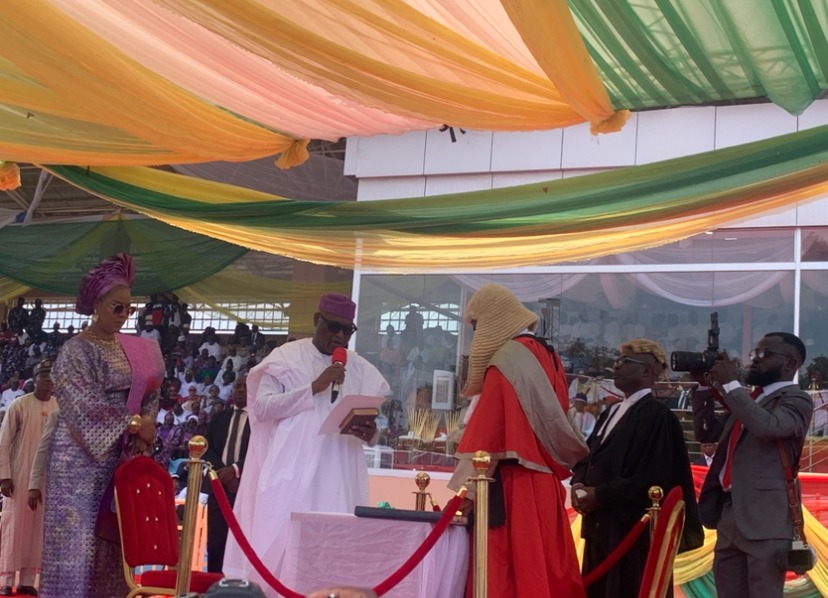
Governor Biodun Abayomi Oyebanji has pledged to deepen development, improve living conditions and expand economic opportunities across Ekiti State as he begins his second term in office, following his inauguration at the Ekiti Parapo Pavilion in Ado-Ekiti on Friday.
The governor, who was returned to office in the June 20, 2026 governorship election, said his renewed mandate carried greater responsibility to deliver tangible benefits to the people, stressing that the next four years would be devoted to building on the achievements of his first administration and addressing areas where more work remained to be done.
In his inaugural address, Oyebanji expressed gratitude to God and the people of Ekiti State for giving him another opportunity to serve, acknowledging that the trust reposed in him came with an obligation to improve the lives of residents across the state.
He said the real value of public office was not in the honour attached to it but in the difference it made in the lives of ordinary people, including pensioners waiting for their entitlements, young graduates seeking employment, traders working to sustain their businesses and parents striving to provide for their children.
According to him, the renewed mandate was a call to work harder, listen more carefully to the concerns of residents and ensure that government policies and expenditure translated into meaningful improvements in people’s daily lives.
The governor thanked President Bola Ahmed Tinubu and First Lady Senator Oluremi Tinubu for their support, while also acknowledging the prayers and encouragement of his spiritual parents, Pastor Enoch Adeboye and his wife, Pastor Folu Adeboye.
He also recognised the contributions of former governors of Ekiti State, including Otunba Niyi Adebayo, Ayodele Fayose, Segun Oni and Kayode Fayemi, noting the importance of drawing from the experiences of past administrations to advance the development of the state.
Oyebanji said political differences should not stand in the way of progress, urging leaders and stakeholders to place the interests of Ekiti above partisan disagreements. He maintained that the development of the state required cooperation among government officials, political parties, traditional rulers, religious leaders, organised labour, the private sector and communities.
Reflecting on his administration’s first four years, the governor said it had pursued development through six broad pillars, with attention given to governance, infrastructure, agriculture, youth development, arts and culture, and human capital development.
He stated that the state’s internally generated revenue had increased by more than 60 per cent during his administration, while salaries and pensions had remained current. He also highlighted payments relating to outstanding gratuities and pensions, putting the amount paid towards gratuities at more than ₦18 billion and pension payments at about ₦73 billion.
The governor said his administration had continued to invest in road construction and rehabilitation, electricity, healthcare, education, agriculture and other areas considered essential to economic growth and improved welfare.
He also pointed to the Ekiti Agro-Allied International Cargo Airport as an important economic asset, with the potential to improve trade, support agricultural exports, attract investors and create employment opportunities for residents.
On healthcare, Oyebanji said the government had continued to strengthen health facilities and support health workers, while efforts in education had included improvements to schools, investment in technical education and measures to equip young people with practical skills for employment and enterprise.
He also identified agriculture as a major avenue for economic expansion, noting the importance of supporting farmers, developing farm clusters and promoting agro-processing. He specifically referred to the livestock processing hub at Ikun-Ekiti as part of efforts to strengthen agricultural production and create additional economic opportunities.
The governor said security remained important to the state’s development, adding that his administration had supported security agencies with equipment and other resources to help them protect residents and maintain peace.
Looking ahead, he said his second term would focus on consolidating existing projects while introducing further interventions to improve productivity, expand economic opportunities and make development more visible in communities across Ekiti.
Oyebanji acknowledged that the rising cost of living remained a major concern for households and businesses. He said the government would continue to explore ways of easing economic pressures, supporting productive activities and ensuring that public resources were directed towards projects capable of improving people’s welfare.
He also highlighted the Knowledge Zone project, which is under construction, describing it as part of the administration’s broader ambition to attract investment, encourage innovation, create jobs and position Ekiti for a more knowledge-driven economy.
The governor stressed that development must extend beyond major towns to rural communities, adding that agriculture, skills development, infrastructure and economic empowerment would remain important in efforts to improve livelihoods and reduce hardship.
In a separate goodwill address, Vice President Kashim Shettima, who represented President Tinubu at the inauguration, congratulated Oyebanji and his deputy, Chief Mrs Monisade Afuye, on their renewed mandates and conveyed the President’s warm wishes to the governor and the people of Ekiti State.
Shettima described the governor’s re-election as an expression of democratic accountability, noting that while a first mandate may be secured on the strength of promises, a second mandate reflects the judgment of voters who have experienced an administration’s leadership.
He said the inauguration was both an occasion for celebration and a reminder of the responsibilities that came with public office. According to him, the greater the applause accompanying an inauguration, the greater the obligation on the elected leaders to justify the confidence placed in them.
The Vice President said every government decision and every naira spent should ultimately be assessed by its impact on the people, describing service to the public as one of the noblest responsibilities of political leadership.
He congratulated Deputy Governor Afuye, commending her dedication to the administration, and paid tribute to traditional rulers, religious leaders, public servants and political stakeholders whose contributions helped preserve the peace necessary for development.
Shettima said the next four years would require the same spirit of cooperation that had supported Oyebanji’s re-election, alongside a stronger commitment to placing the interests of Ekiti above political disagreements.
He commended the governor’s approach to leadership, describing it as characterised by composure, respect for institutions, attentiveness to the concerns of residents and a reluctance to use public office for personal grandeur.
The Vice President also thanked the people of Ekiti for renewing the mandate of the All Progressives Congress, saying the party had a responsibility to remember that its authority came from the electorate and that electoral victories must translate into the patient work of governance.
He used the occasion to defend the economic reforms being undertaken by the Tinubu administration, arguing that the President had been confronted with serious fiscal burdens and structural distortions that required difficult decisions.
Shettima acknowledged that Nigerians had endured economic discomfort arising from the reforms but said the sacrifices should ultimately produce an economy that rewards hard work, widens opportunities and ensures that public resources respond more effectively to people’s needs.
He expressed appreciation to APC leaders, organisers and members in Ekiti for their support, while congratulating Oyebanji once again and wishing the governor, his deputy and the people of the state wisdom, strength and success in the years ahead.
In his own address, Oyebanji acknowledged the support of President Tinubu, Vice President Shettima, the leadership of the National Assembly, members of the Federal Executive Council and other national political leaders who attended or supported the inauguration.
He also recognised the contributions of governors, party leaders, traditional rulers, religious leaders, public servants, labour unions, pensioners, artisans, market women, persons with disabilities, community associations, alumni groups and Ekiti indigenes at home and abroad.
The governor paid tribute to prominent individuals who had contributed to the state’s development and public life, including legal practitioner Wole Olanipekun, former Ogun State Governor Segun Osoba, former Osun State Governor Bisi Akande and other political and community leaders.
He also acknowledged the political opponents who contested the governorship election, including Dr Wole Oluyede of the Peoples Democratic Party, Ambassador Dare Bejide of the African Democratic Congress and Isaac Alade of the Social Democratic Party, alongside other political stakeholders.
Oyebanji expressed appreciation to his wife, Professor Olajumoke Oyebanji, their children and other members of his family for their support. He also thanked Deputy Governor Afuye, former commissioners, political appointees and other public officials who had worked with him during his first term.
The governor said his administration remained open to investors, development partners and other organisations willing to contribute to the state’s progress, adding that sustained development would require cooperation between government and the private sector.
He called on Ekiti residents to remain committed to peace, unity and collective responsibility, saying the task ahead was to ensure that the benefits of governance reached every community and household, regardless of political affiliation or social background.
Oyebanji concluded by urging the people to work together towards a state where economic opportunities are wider, public services are stronger and young people can build meaningful futures without having to leave their communities in search of a better life.
“Ekiti-Kete, let’s make progress count for every community, every generation, and every home,” the governor said in his closing message, as he prayed for the continued peace and development of Ekiti State and the Federal Republic of Nigeria.